 Yuri Chekalin
Social inclusiveness is determined not only by a country’s economic development but also by the extent to which people with disabilities can participate in public life.
Japan is often perceived as a country of high technology, discipline, and respect for the community. However, the issue of integrating people with disabilities into Japanese society has long remained complex and controversial. Today, Japan is gradually moving toward a more inclusive model, combining government reforms, technological innovation, and a shift in public awareness.
Historically, attitudes toward people with disabilities in Japan were largely closed.
Traditional culture placed great importance on social harmony and conformity to societal expectations. People who differed from the majority often found themselves isolated from active public life. Many families preferred to conceal the presence of disabilities in relatives for fear of social stigma. This was especially true for people with mental and intellectual disabilities.
The situation began to change noticeably in the second half of the 20th century.
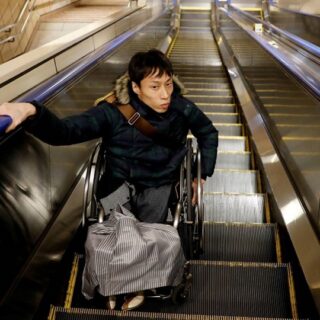
Influenced by international human rights movements and domestic reforms, the Japanese government has begun to pay greater attention to accessibility and social support. Laws have been passed to eliminate discrimination and create equal opportunities in education and employment. The development of barrier-free infrastructure has been a key step: elevators and tactile pathways have been added to train stations, public transportation has become more accessible for wheelchair users, and the number of designated public spaces has increased in cities.
Technology plays a key role in Japan’s inclusiveness.
The country actively utilizes robotics and digital solutions to support people with disabilities. Robot assistants assist the elderly and those with mobility impairments, while modern devices facilitate communication for the hearing-impaired and visually impaired. Japan’s advanced technological development allows it to create innovative support tools that are gradually becoming part of everyday life.
However, despite this progress, challenges remain. Many Japanese companies remain reluctant to hire employees with disabilities, fearing additional costs or reduced productivity. Although legislation requires a certain quota for the employment of people with disabilities, in practice, employers sometimes formally comply with these requirements without ensuring the full integration of workers into the workforce. Furthermore, people with intellectual disabilities still face social stigma and insufficient support.
Education also remains an important area for promoting inclusion.
In Japan, there are both special schools and programs for integrating children with disabilities into mainstream schools. On the one hand, specialized institutions provide necessary support and adapted education. On the other hand, separating children can hinder the development of an inclusive society where people with different abilities interact from an early age.
International sporting events, particularly the Tokyo Paralympic Games, have been a significant catalyst for changing societal attitudes.
They have drawn attention to the achievements of athletes with disabilities and demonstrated that physical limitations do not prevent people from achieving success and being active participants in society. Following the competitions, the topic of accessibility and equality has become noticeably more prominent in Japanese media and public discourse.
Thus, Japan is gradually developing a more inclusive society. The country has already achieved significant success in creating accessible infrastructure and implementing support technologies, but changing public attitudes takes time.
True inclusivity lies not only in the availability of ramps and laws.
It also lies in society’s willingness to embrace people with disabilities as equal participants in social, cultural, and professional life.
Japan’s experience shows that even a highly developed country continues to learn to overcome barriers—both physical and psychological.